

SCRAM™ · Emergency anaesthesia
Rx SCRAM™ Line
Simplify and standardise emergency anaesthesia.
Three drug bags that organise medicines and preparation equipment for emergency anaesthesia. Designed to move work out of the emergency, so more attention can stay with the patient.
The preparation problem
Why Rx SCRAM™?
When a patient needs emergency anaesthesia, the drugs and preparation equipment should already be organised. Having to find and assemble them at that point creates avoidable work for a team caring for a critically ill patient.
I developed Rx SCRAM™ to move that organising work out of the emergency. It brings medicines and the items needed to prepare them together in a consistent layout that the team can stock and check in advance.
The design also had to accommodate differences between services. Drug choices vary, and pre-filled syringes are not always available. Organising by drug class allows each service to establish its own setup, using ready-to-administer syringes, medicines that need to be drawn up, or a mixture of both.
The purpose is simple: simplify and standardise emergency anaesthesia to reduce intervention time, error and cognitive load.
Inside the design
Three considerations shaped the design of Rx SCRAM™.
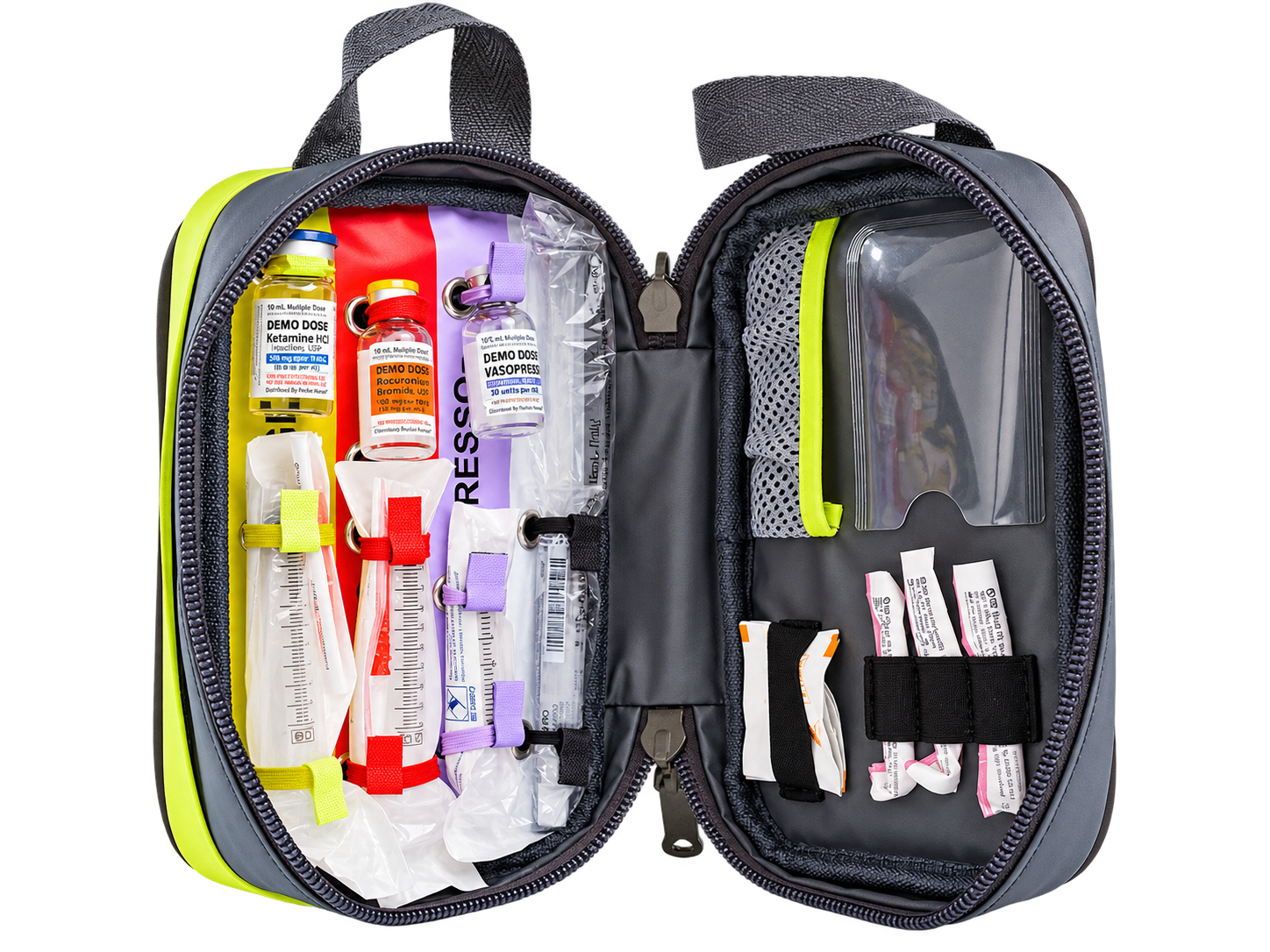
How drugs are prepared. Some services use ready-to-administer syringes; others draw up medicines shortly before the intervention. Many use both. Rx SCRAM™ accommodates pre-filled syringes, ampoules and vials, with adjustable retaining cords to suit different sizes. The configuration can change as suitable pre-filled medicines become available.
Which drugs are used. Drug choices vary between services, both in hospital and in the prehospital environment. Organising the layout by drug class allows each service to configure the bag around its own emergency anaesthesia protocol. The team can establish a consistent arrangement using the medicines available to it.
Reducing opportunities for error. The design brings medicines and preparation equipment together in labelled, colour-coded sections that reflect established anaesthetic syringe-labelling conventions. Where a drug needs to be drawn up, the correct size syringe can sit beside its drug ampoule or vial, with needles, wipes, labels and syringe caps close to hand. This arrangement makes the setup easier to find your way around and check, while allowing more of the organising work to happen before the emergency.
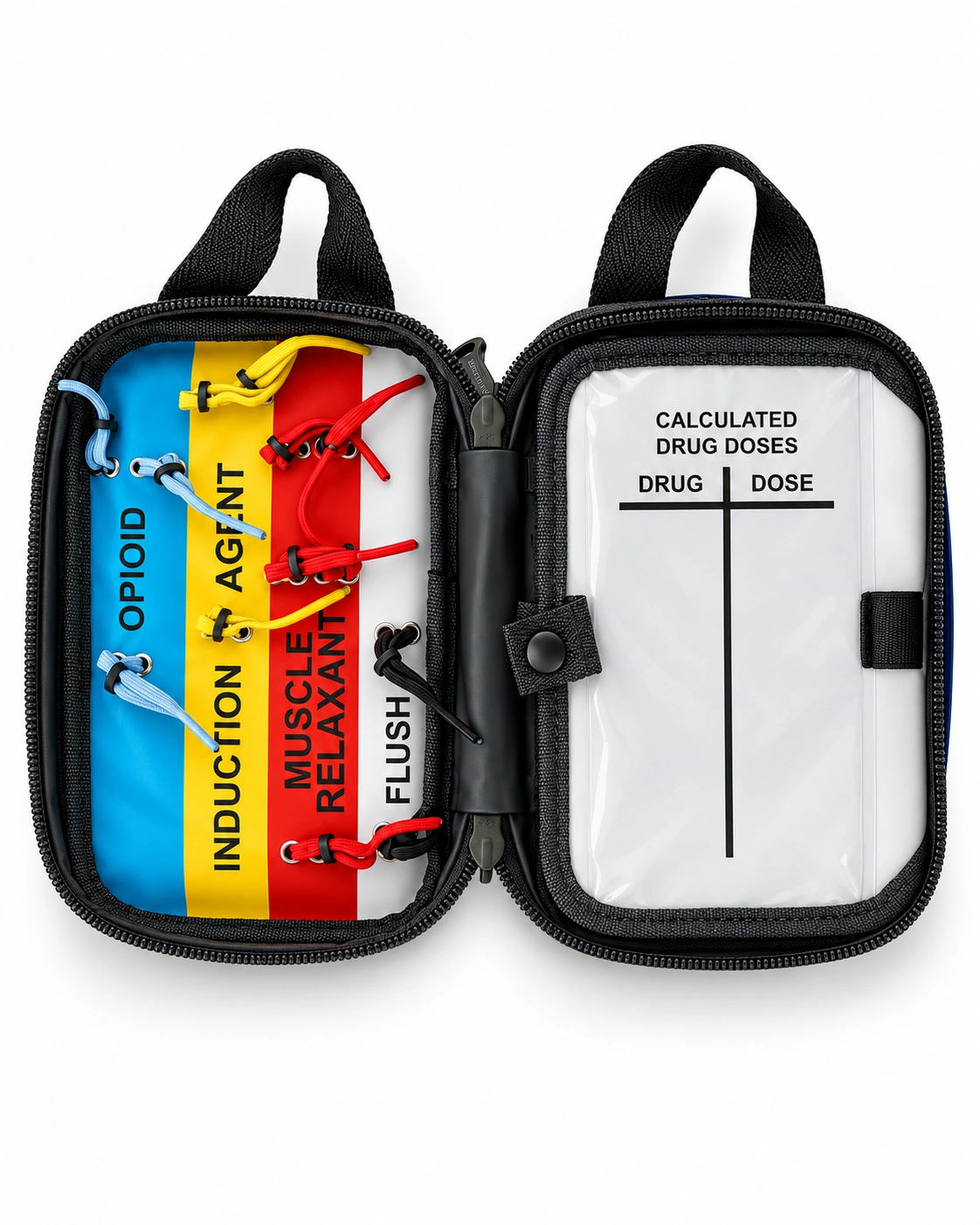
Three bags. A common approach.
Rx SCRAM™ and Tactical Rx SCRAM™ share the same layout for induction and ongoing anaesthesia. CRASH Rx SCRAM™ is arranged around four drug positions for an unexpected intubation.
Rx SCRAM™
Drug preparation for induction and ongoing anaesthesia.
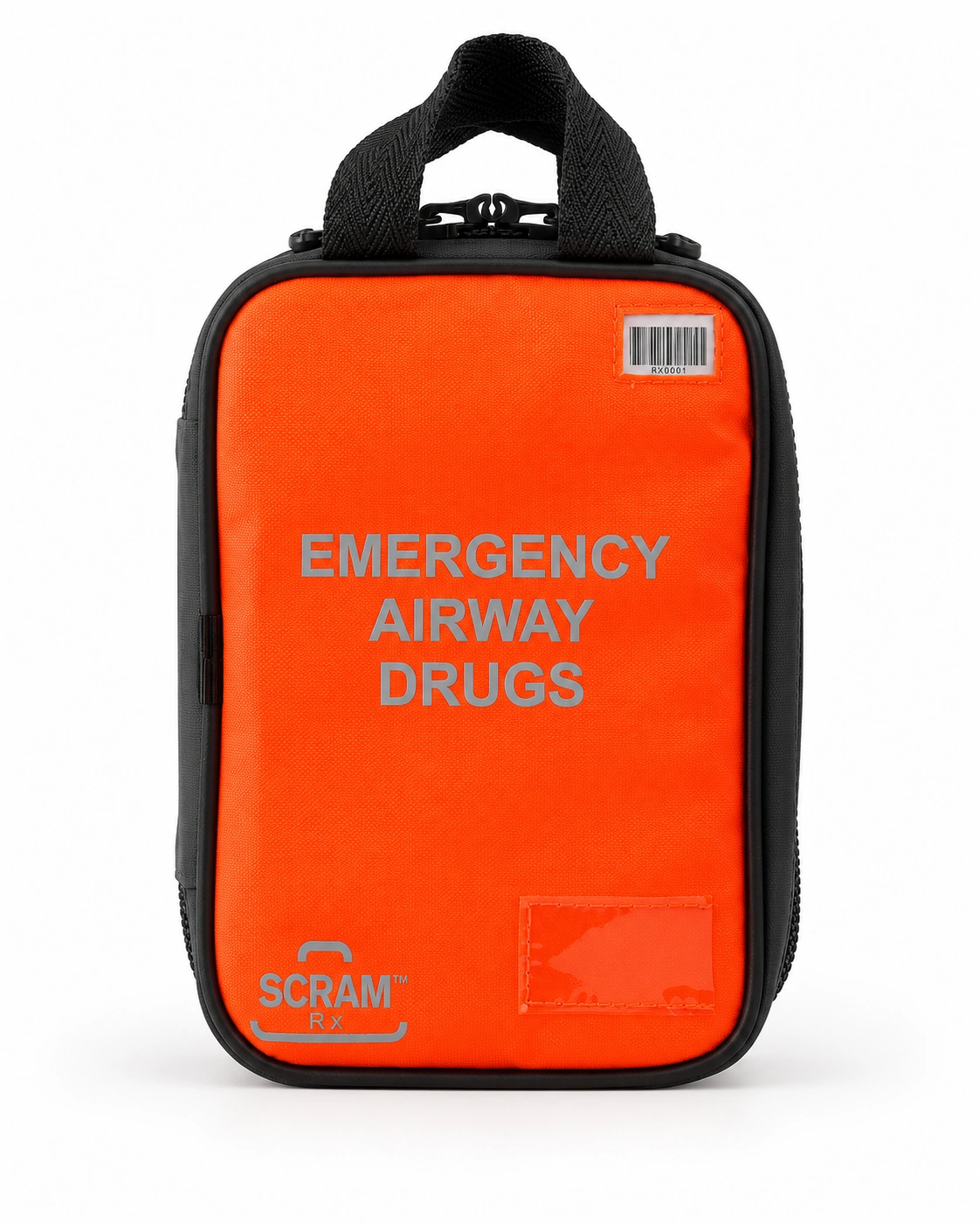
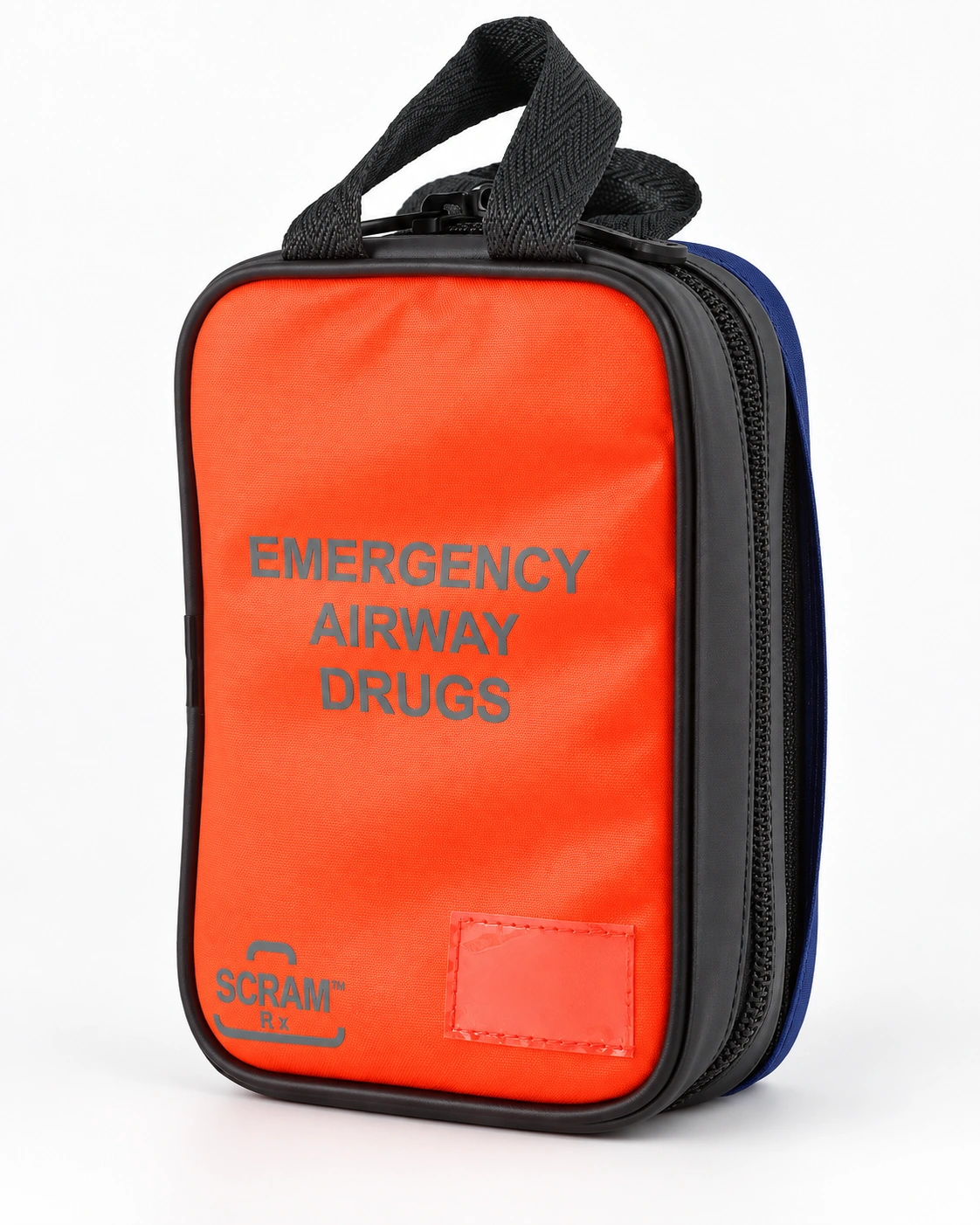
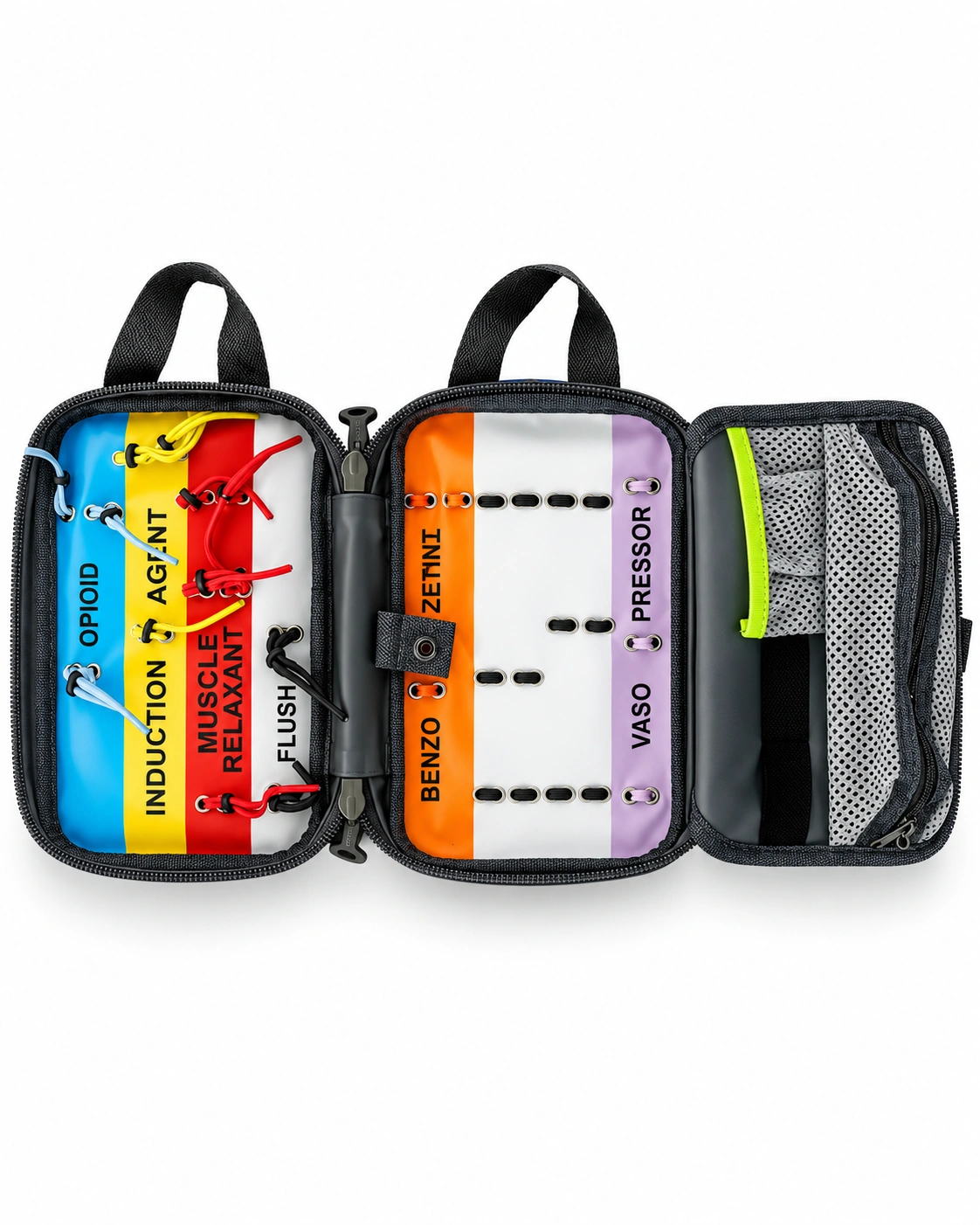
Rx SCRAM™ · Photograph 1 of 7
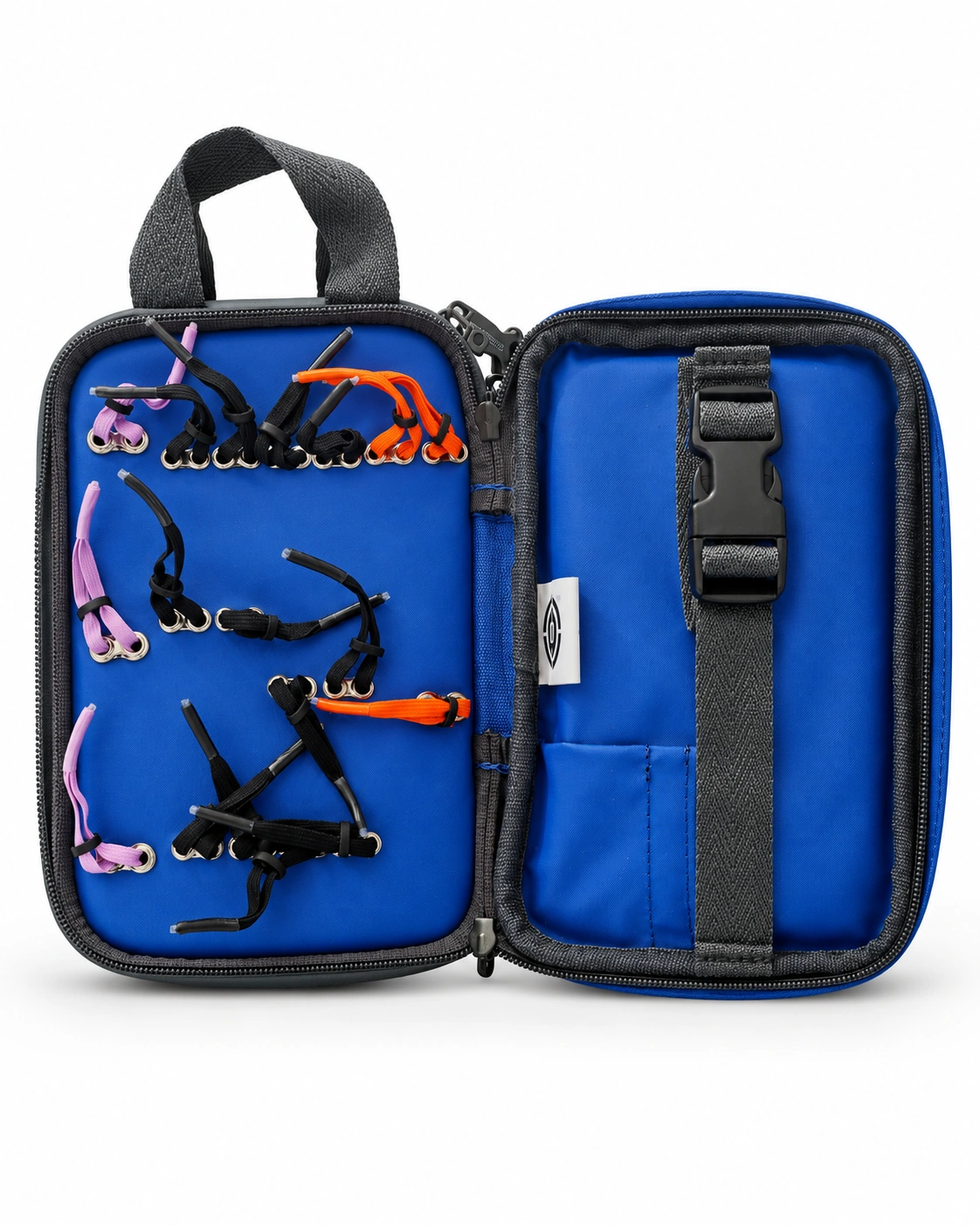
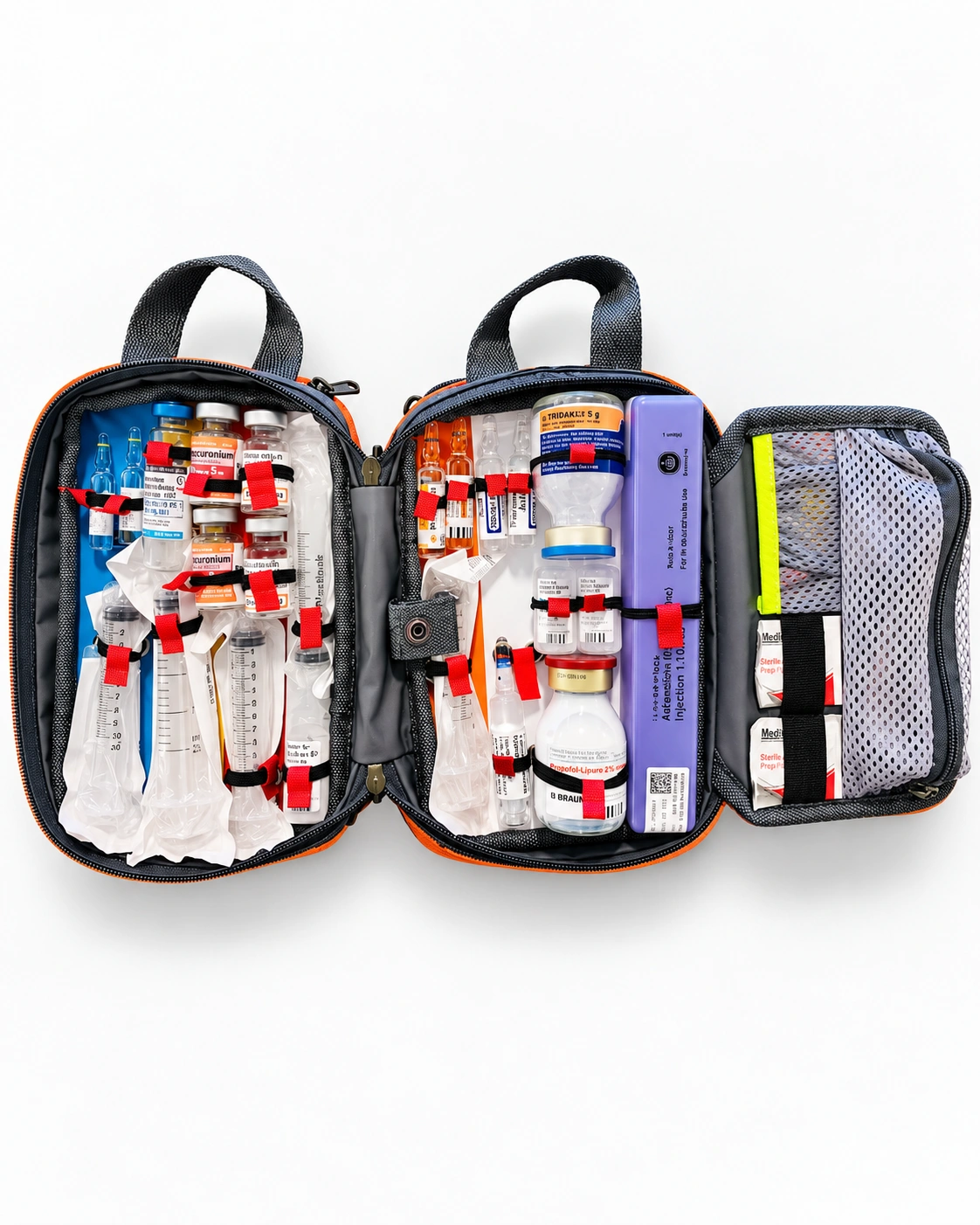
View full imageRx SCRAM™ provides space for an opioid, an induction agent, a muscle relaxant, a flush, a benzodiazepine and a vasopressor. There is also space for additional drugs and the items needed to prepare them.
Adjustable elastic loops accommodate different syringe, ampoule and vial sizes. The bag also has a secondary storage. A wipe-clean writing panel keeps notes beside the working area, with a dedicated place for the marker.
Dimensions: 21 × 14 × 9 cm.
Tactical Rx SCRAM™
The same layout, in tactical green and black.
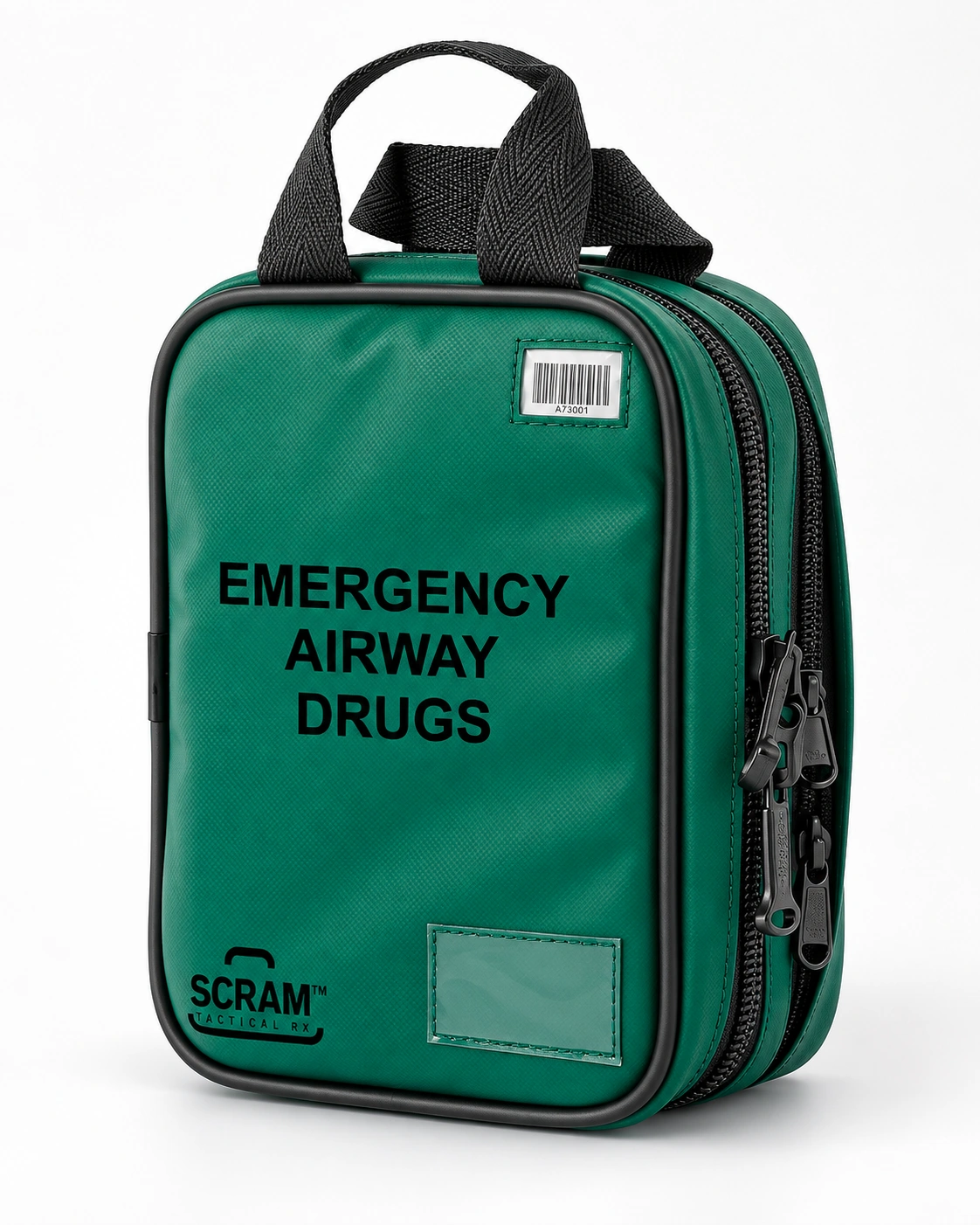
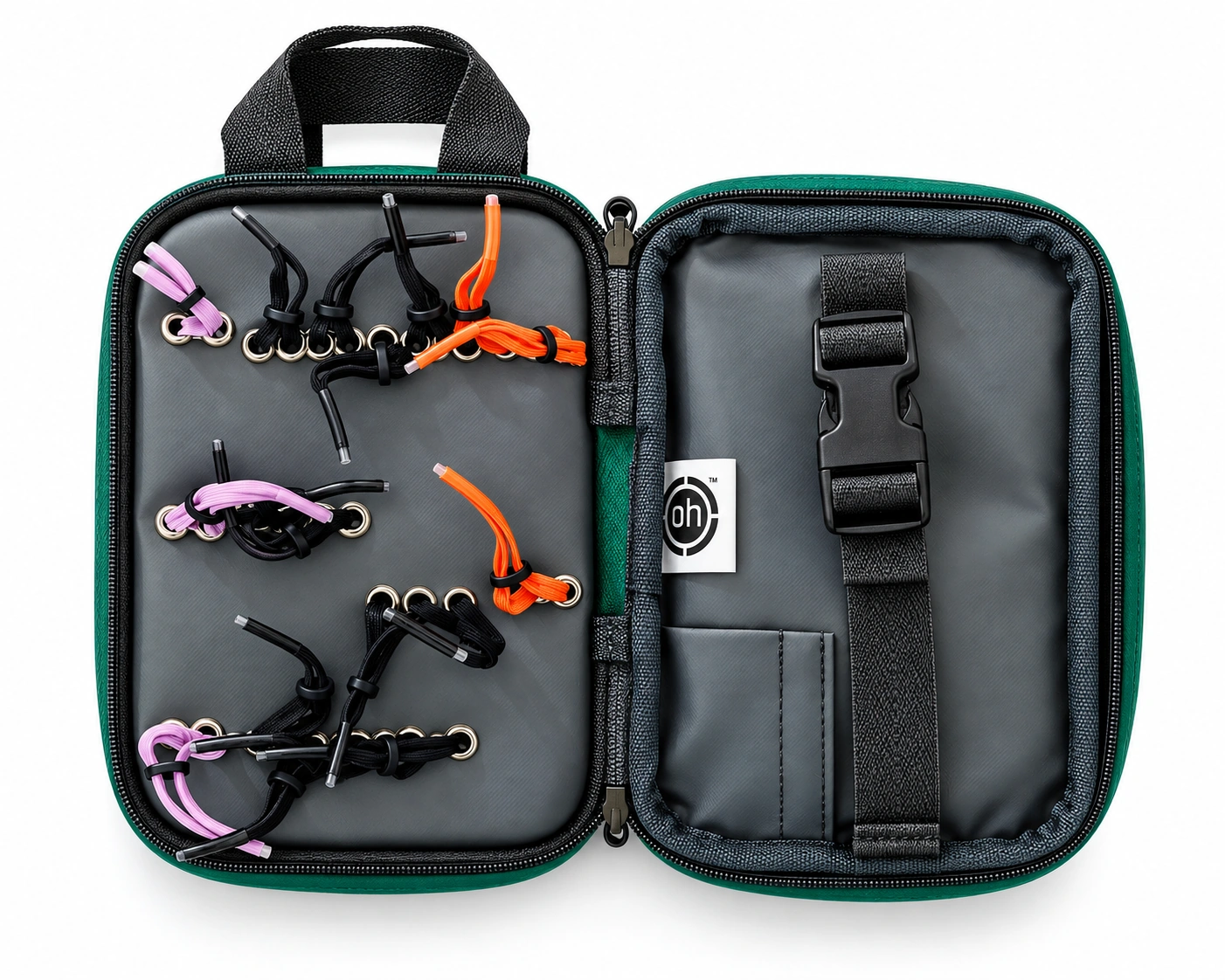
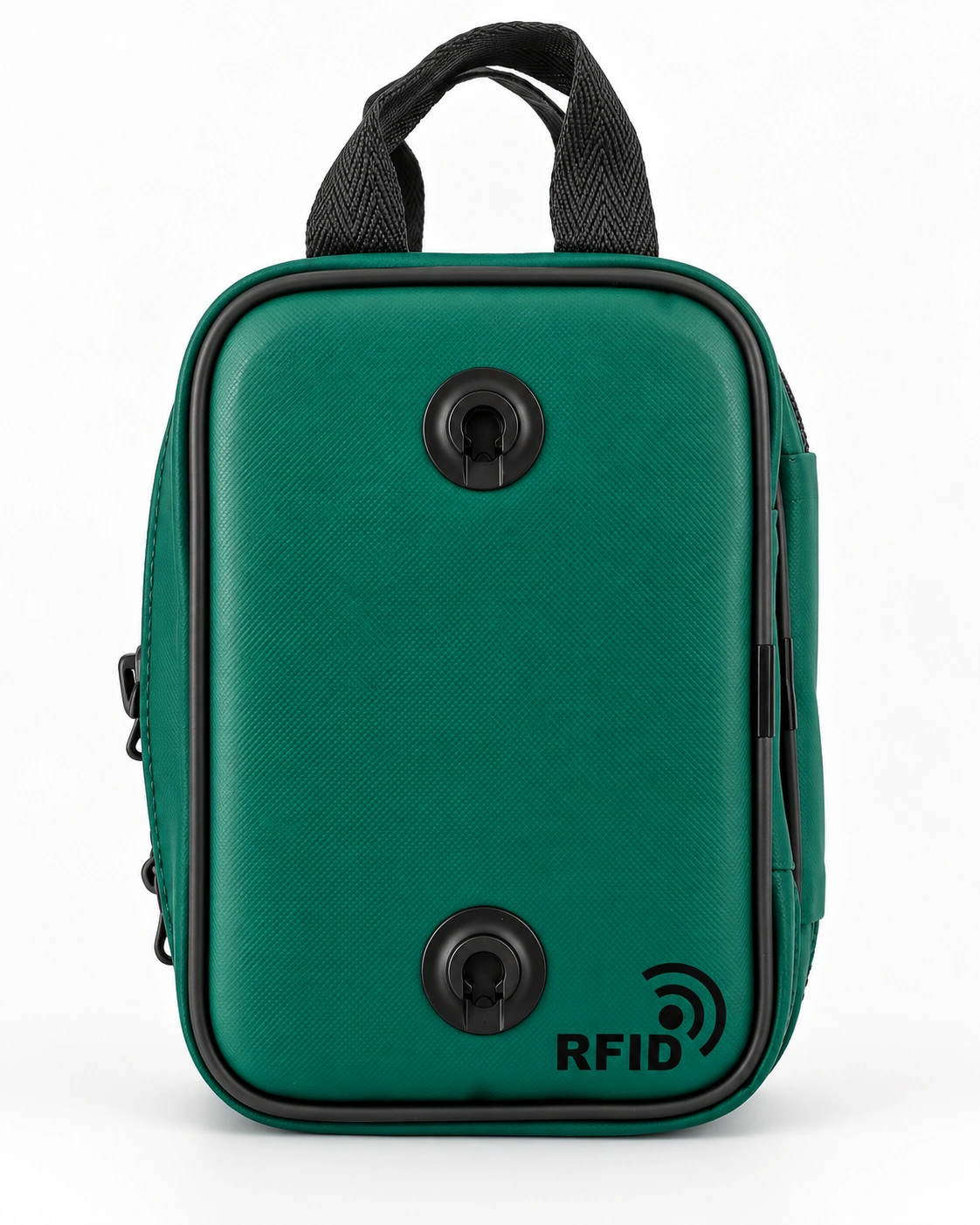
Tactical Rx SCRAM™ · Photograph 1 of 6
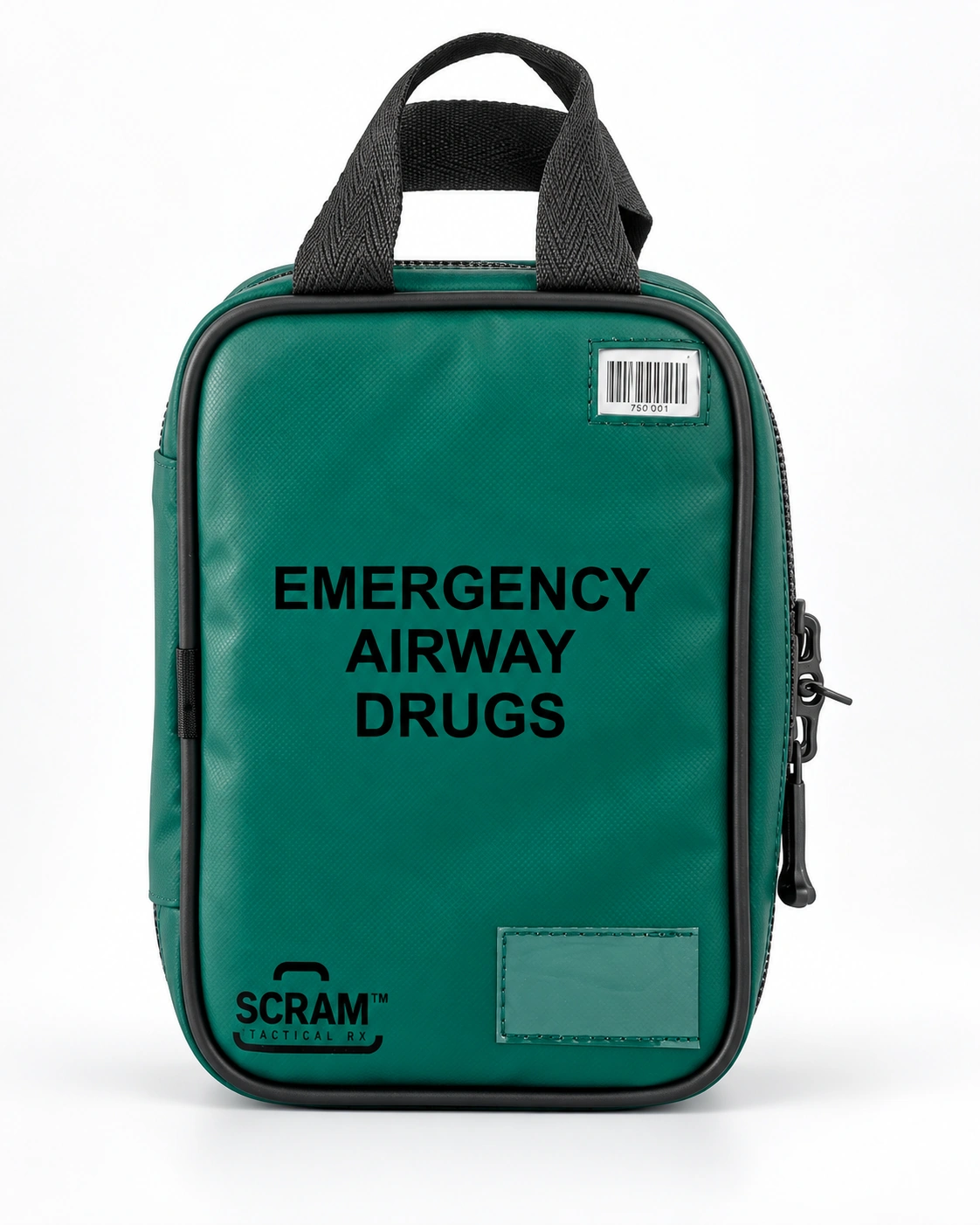
View full imageTactical Rx SCRAM™ has the same internal arrangement and features as Rx SCRAM™, including the adjustable drug storage and wipe-clean writing panel. The difference is the exterior colour.
Dimensions: 21 × 14 × 9 cm.
CRASH Rx SCRAM™
A compact drug setup for an unexpected intubation.
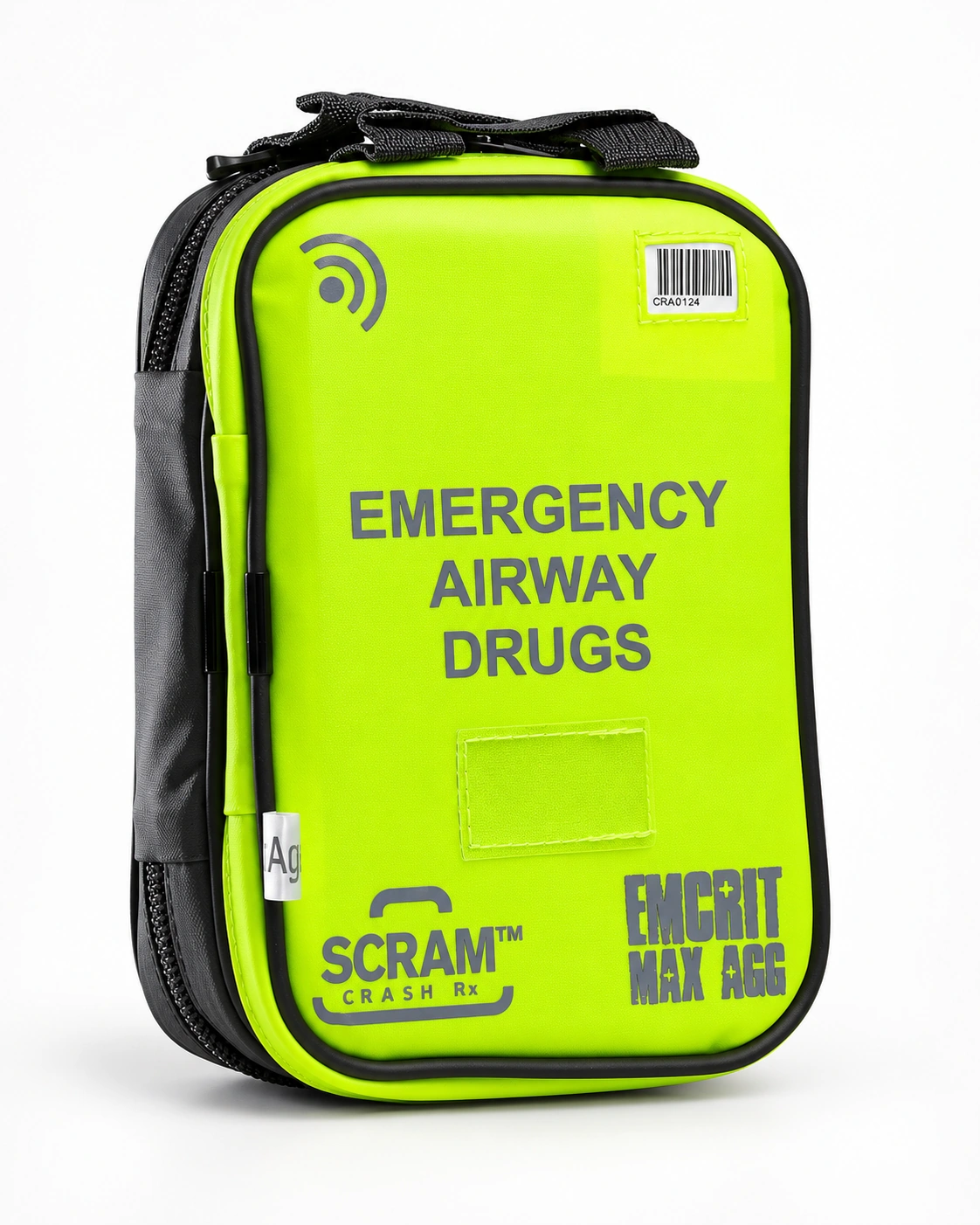
CRASH Rx SCRAM™ · Photograph 1 of 5
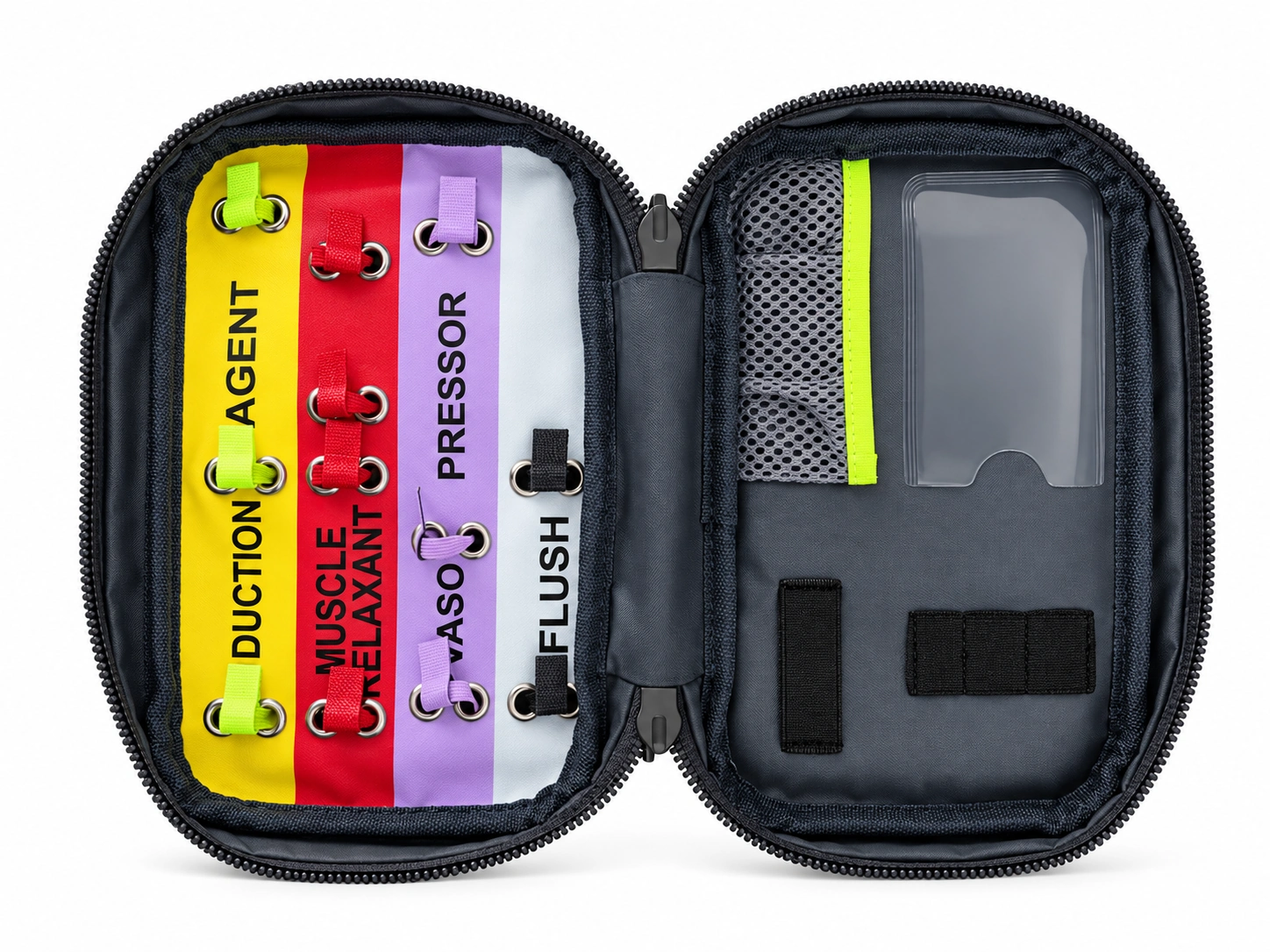
View full imageProfessor Scott Weingart and I developed CRASH Rx SCRAM™ around a specific requirement. Scott wanted the drugs and preparation items for an unexpected intubation kept together in a dedicated bag, ready to use with the Resus SCRAM™ airway equipment bag.
Dimensions: 21 × 14 × 8 cm.
Inside CRASH Rx SCRAM™CRASH Rx SCRAM™
A compact drug setup for an unexpected intubation.
Four positions
The working panel has labelled, colour-coded positions for an induction agent, a neuromuscular blocking drug, a vasopressor and a flush. Needles, preparation wipes and syringe labels sit alongside them. A clear pocket can hold the service's preparation instructions where they are needed.
Adjustable to the service's setup
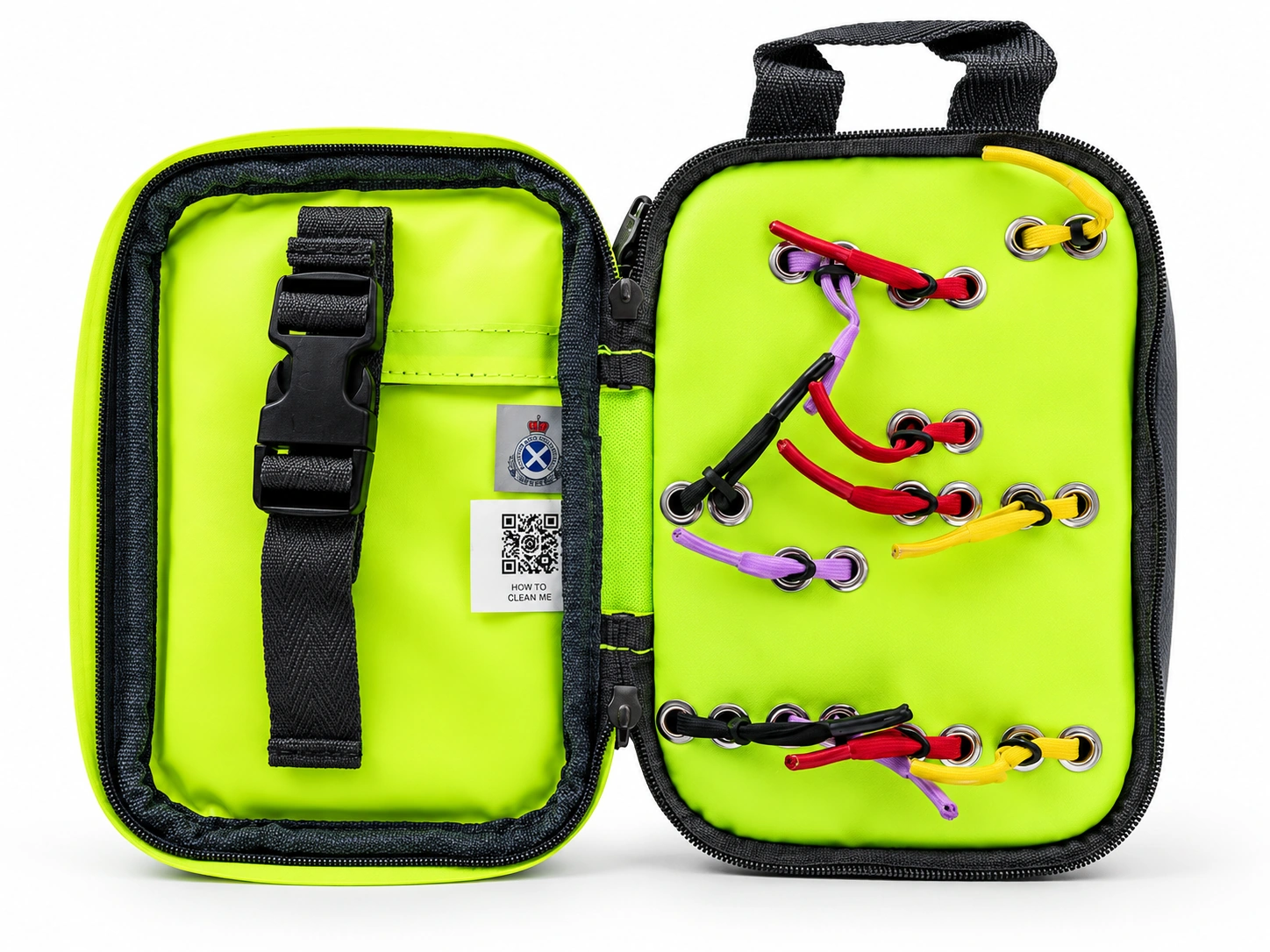
The elastic loops can hold ampoules or vials beside the correct size empty syringe, or accommodate pre-filled syringes. Each elastic cord is individually adjustable from behind the working panel, allowing the fit to be set for the chosen ampoules or vials and syringe sizes.
Once the arrangement is established, the adjustment panel closes away. It can be opened again when the stock or configuration or sizes changes.
Scott Weingart
CRASH Rx SCRAM™
Scott talks about the design,use and insights.CRASH Rx SCRAM™
Developed in collaboration.

Paul Swinton
Developer of Rx SCRAM™ and Tactical Rx SCRAM™. Co-developer of CRASH Rx SCRAM™.
About Paul

Professor Scott Weingart
Co-developer of CRASH Rx SCRAM™, bringing the requirement for a compact drug setup for unexpected hospital intubation.
Explore the Resus SCRAM™ collaboration
Preparation that fits the service
Pre-filled syringes, ampoules and vials
Some services have access to ready-to-administer syringes. Others still need to draw up medicines at the time of the intervention. Many use both. Rx SCRAM™ line accommodates these differences and allows the configuration to change as suitable pre-filled products become available.
Ready-to-administer medicines remove preparation steps from the patient's side. A 2024 analysis of a UK preparation procedure identified 30 of 52 steps that could be removed by using pre-filled syringes. That explains an important part of their value: fewer preparation tasks to complete during care. The analysis examined the process, rather than measuring a reduction in patient harm.
The January 2026 guidance from the Royal College of Anaesthetists and the Association of Anaesthetists recommends pre-filled syringes when available, separation from ampoules and vials, and adequate space in grab bags. Where a service uses both formats, the arrangement needs to distinguish ready-to-administer medicines from those awaiting preparation.
Commercially manufactured pre-filled syringes come with specified storage conditions and an expiry date. For syringes drawn up locally, the service needs clear guidance, agreed with its pharmacy team, on preparation, labelling, storage and how long they can be kept.
Cost and availability also influence which medicines a service can carry pre-filled. A 2026 NHS economic model estimated that switching to pre-filled syringes would reduce overall costs for some medicines but increase them for others. Rx SCRAM™ accommodates both pre-filled syringes and medicines that need to be drawn up, allowing the setup to change as suitable products become available.
Further reading on prepared medicines
Scott's accompanying article and demonstration link to studies of prepared-syringe sterility in prehospital services and an obstetric operating room. Their findings relate to the medicines and conditions studied; sterility alone does not establish chemical stability or a general expiry period.
The Association of Anaesthetists' 2023 injectable-medication guidance provides broader advice on preparation, labelling and handling.
Preparation and workspace design
What the research tells us
Preparing equipment and drugs in advance
In our 2018 randomised crossover simulation study, teams carried out pre-hospital emergency anaesthesia using either equipment and drugs prepared in advance, or a conventional setup requiring preparation during the scenario.
With the prepared setup, procedural time was shorter, there were fewer recorded procedural errors, and the intubator assistant reported lower cognitive load. Drug preparation accounted for the largest component of the time saving.
The study tested the Adult SCRAM™ airway equipment bag and prepared drugs together. It supports advance preparation as a design principle; it did not isolate the effect of an Rx SCRAM™ bag or measure patient outcomes. Read the study.
The 2026 Association of Anaesthetists prehospital anaesthesia guideline cites this study in its preparation section, which recommends standardised preparation, immediately available equipment and drugs, and a team checklist. This is a reference to the preparation research, rather than an endorsement of an individual product.
Organising the medication workspace
How medicines are arranged also matters. A 2017 study of an anaesthesia medication template found fewer dosing errors in simulation and fewer self-reported medication errors after clinical implementation. Errors causing patient harm did not change.
Experiments published in 2023 and 2024 found that colour-coded, compartmentalised syringe trays helped clinical staff search for drug errors. These were visual-search tasks, rather than trials of drug administration to patients. These findings support a principle behind Rx SCRAM™: make the drugs easier to find and the setup easier to check.
Practical details
RFID / NFC
Audit and identification
The expiry-date window keeps expiry information visible on the bag. A unique barcode can link the bag to a stock list or checking record in a compatible system.
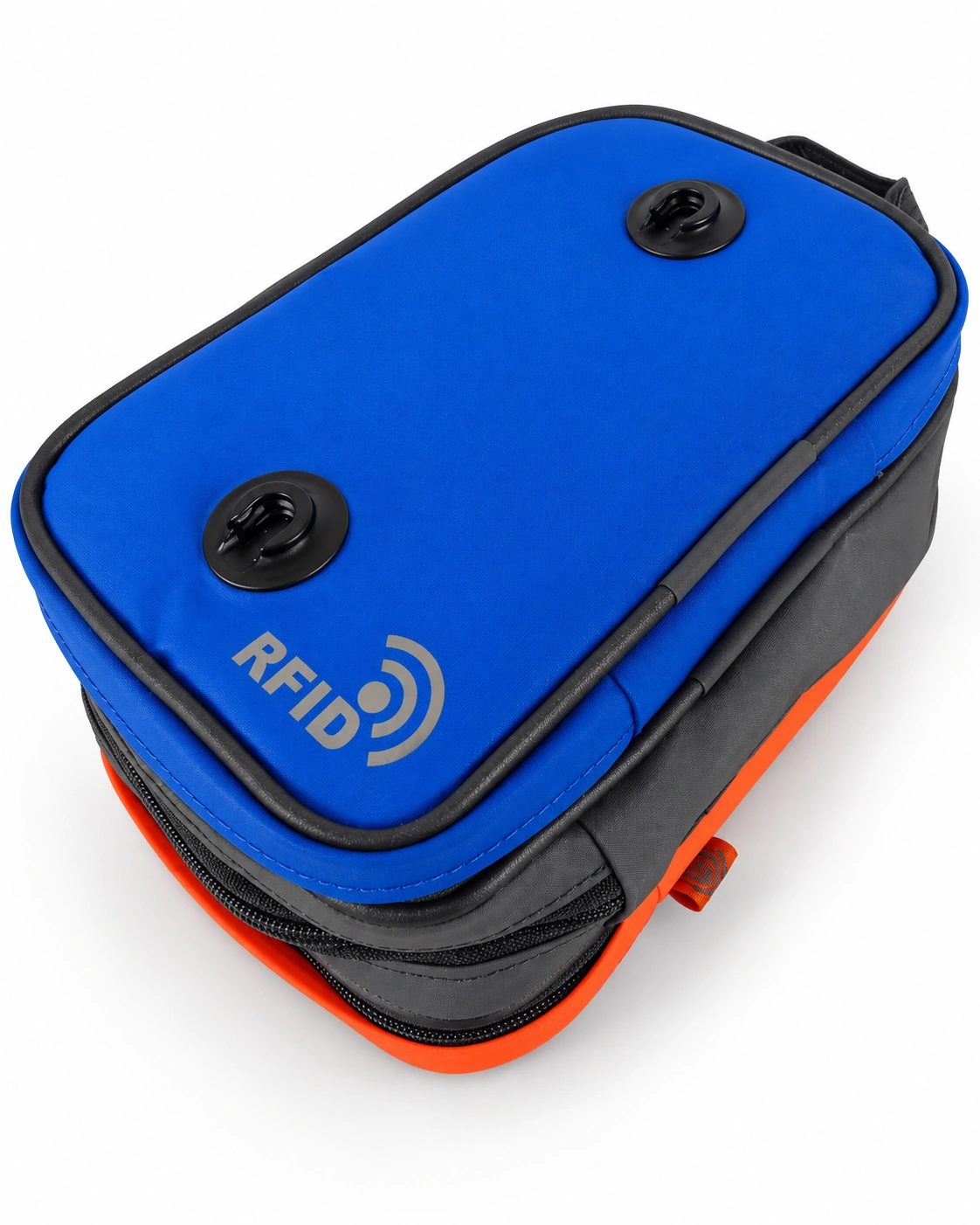
The RFID/NFC pocket holds an optional electronic identification tag, providing another way to identify the bag and access its record. Tags are not included.
Access and seals
Oversized zip pulls provide a larger grip when wearing gloves. The zips accept compatible tamper-evident seals to help show whether the bag has been opened since it was checked and sealed.
Cleaning between uses
The bags use wipe-clean micrAgard™ material. Follow the manufacturer's cleaning instructions and the service's infection-prevention process.
Fidlock connection
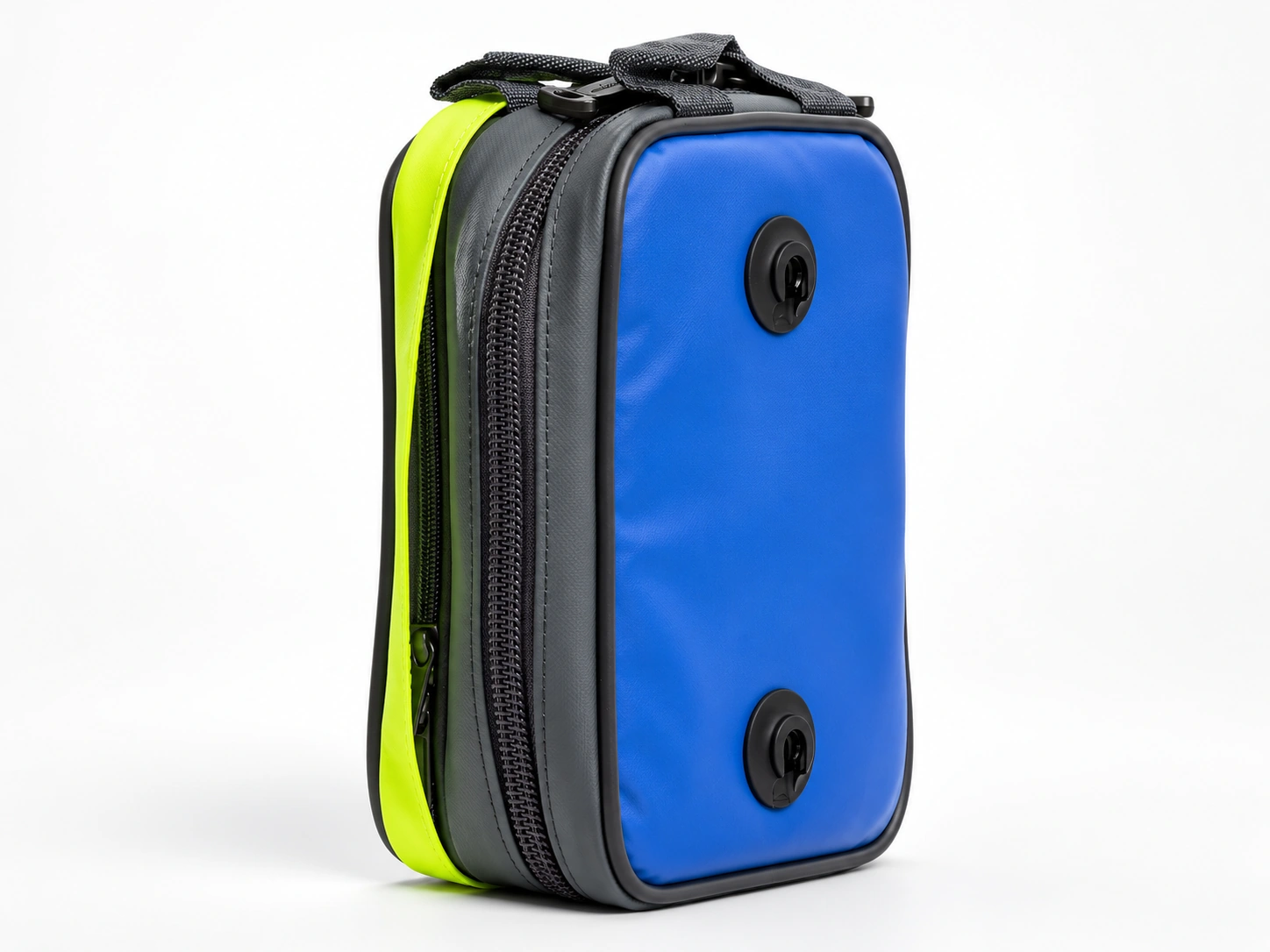
All three bags in the Rx SCRAM™ line have rear Fidlock fittings that combine magnetic alignment with a mechanical fastening. They are compatible with Adult SCRAM™, Paediatric SCRAM™ and Resus SCRAM™ bags.
How it connects
Fidlock system
Magnetic alignment. Mechanical fastening.
Compare the line
| Feature | Rx SCRAM™ | Tactical Rx SCRAM™ | CRASH Rx SCRAM™ |
|---|---|---|---|
| Main distinction | Induction and ongoing anaesthesia, with space for additional drugs | Same setup in tactical green and black | Focused setup for an unexpected intubation |
| Dimensions | 21 × 14 × 9 cm | 21 × 14 × 9 cm | 22 × 15 × 8 cm |
| Drug formats | Pre-filled syringes, ampoules and vials | As Rx SCRAM™ | As Rx SCRAM™ |
| Wipe-clean writing panel | Yes | Yes | No |
| Development | Paul Swinton | Paul Swinton | Paul Swinton and Professor Scott Weingart |
Rx SCRAM™
- Main distinction
- Induction and ongoing anaesthesia, with space for additional drugs
- Dimensions
- 21 × 14 × 9 cm
- Drug formats
- Pre-filled syringes, ampoules and vials
- Wipe-clean writing panel
- Yes
- Development
- Paul Swinton
Tactical Rx SCRAM™
- Main distinction
- Same setup in tactical green and black
- Dimensions
- 21 × 14 × 9 cm
- Drug formats
- As Rx SCRAM™
- Wipe-clean writing panel
- Yes
- Development
- Paul Swinton
CRASH Rx SCRAM™
- Main distinction
- Focused setup for an unexpected intubation
- Dimensions
- 22 × 15 × 8 cm
- Drug formats
- As Rx SCRAM™
- Wipe-clean writing panel
- No
- Development
- Paul Swinton and Professor Scott Weingart
Dimensions supplied by Openhouse Products. Drug formats are arranged to the service's agreed configuration.
Orders and enquiries

Openhouse Products
Manufacturer and distributor
Product specifications, configuration and global orders.

The Resus Tailor
USA distributor
US orders and enquiries for all three products.
Disclosure. I developed Rx SCRAM™ and Tactical Rx SCRAM™, and co-developed CRASH Rx SCRAM™ with Professor Scott Weingart. I have a commercial interest in SCRAM™. Openhouse Products manufactures and distributes the products; The Resus Tailor is a US distributor.